Considering the sheer scale of complexity and obfuscation in our nation’s rules and regulations, perhaps no law rivals that of the National Environmental Policy Act, or NEPA, in its impact on everyday Americans. Federal regulation is estimated to cost the American economy as much as $1.9 trillion per year in direct costs, lost productivity, and higher prices. TheNational Association of Manufacturers has issued a report showing that the average U.S. company pays $9,991 per employee per year to comply with federal regulations.
Although NEPA was created with good intent to preserve the rich quality of our nation’s natural environment, it has become a baroque web of compliance that has shifted from its original purpose with an outsized deleterious effect on communities of all types in various stages of economic development. About 38.5% of American adults — or 89.1 million people — faced difficulty in paying for usual home expenses between April 26 and May 8 of this year, according to a Census Bureau survey. That’s up from 34.4% a year ago and 26.7% during the same period in 2021. The consequences of regulatory complexity rest disproportionately on the most vulnerable, whether it be direct and indirect costs associated with higher energy bills or increased expenses associated with never-ending transportation projects. Our leaders should reconsider and reform the byzantine nature of regulatory approvals associated with NEPA.
Rapid U.S. industrialization in the 1950s motivated President Richard Nixon in 1969 to develop what would be referred to as the “Magna Carta” of federal environmental policy: the National Environmental Policy Act. Once NEPA was signed into law on Jan. 1, 1970, federal agencies were required to investigate potential environmental impacts prior to pursuing projects, called environmental assessments or environmental impact statements. An environmental assessment is a preliminary investigation that determines if a more extensive investigation, the impact statement, is required. These investigations involve determining whether proposed projects would impose a significant environmental impact and alerting the public of these potential outcomes. Such a process has been used to stymie industry necessary for our national security and wealth, namely energy and mineral resource industries. This, in conjunction with recent global events, is what has increased the costs of living for all Americans.
In August 2017, President Donald Trump issued an executive order directing the Council on Environmental Quality to streamline its regulations to allow for expedited reviews and approvals of projects. Although the council streamlined the process in July 2020, the Biden administration moved to reverse this decision in April 2022 with additional guidance indicating that greater detailed analysis in impact statements would be required for projects related to the emission of greenhouse gasses. This, of course, targets the energy sector; its extraction methods emit such gases, much more relative to other industries, and its end products additionally contribute to overall greenhouse-gas emissions.
This greater scrutiny over the energy sector, however, is disproportionate to other business and does not effectively weigh the value and necessity of energy production. For instance, even if the U.S. limits its domestic energy production this will not reduce the amount of energy products it imports. As of 2022, the U.S. on average consumes 20.28 million barrels of oil per day (7.4 billion barrels a year) of which 19.98 million barrels per day, or 98.5%, are domestically produced. It appears that the supposed concern for “environmental justice,” which focuses on lower socioeconomic groups susceptible to the impacts of environmental deterioration, is an issue that proponents of NEPA’s hardline regulations would like to export entirely to other countries. Ironically, based on climate activists’ arguments, overall global greenhouse-gas emissions would remain the same, netting the equivalent climate change outcome whether the U.S. imports energy or produces its own. As a result, American energy companies would suffer from a lack of projects to establish energy independence, and all Americans would pay higher costs across the economy.
Essentially, the world runs on these energy products, and the reduction of domestic production would not eliminate the effect of American consumption. Such obstinate reasoning led to the long, drawn-out battle over the strategic Keystone XL Pipeline that could have provided 830,000 barrels of oil per day to the U.S. from Canada. Although the project is now officially abandoned, the process that ran from 2008 to 2021 involved legal battles invoking NEPA, but not because of any environmental-impact findings. Rather, in 2015, the Obama administration was concerned more about the image the U.S. would foster in promoting energy production while negotiating its leadership role in the Paris Climate Accords.
Despite NEPA not being the nail in the coffin for the Keystone XL Pipeline project, it was one of a number of tools meant to slow down the construction process long enough for a supportive administration to revoke the permit necessary to halt construction altogether. During the Trump administration, the opposition argued that the low cost of oil and increased U.S. energy production made the project less economically attractive; however, the ripple effects of the COVID-19 pandemic and other global conditions have strained oil prices since then. What made sense in the pre-COVID age does not add up in today’s world since this project should be considered even more economically viable.
Since the implementation of NEPA in 1970, our nation has had five decades to evaluate both the merits and shortcomings of these environmental laws. Some argue that NEPA has evolved into an outdated system of environmental assessment that does not align with the realities of our current political, economic, social and environmental climates. The politicization of science and reliance on vague terms punish not only industries that do not align with particular environmental policies, but also those that are built to achieve those very policy goals.
Although meant to protect the environment, NEPA has affected the American people in a manner it was not intended for — increasing hardship on economically vulnerable groups. Overly cautious assessments of environmental impacts have undermined our nation’s security by restricting access to natural resources, which contributes to overall national growth. Regulation in and of itself is not counterproductive, but when left unchecked by Congress and the White House, rulemaking and the tremendous costs associated with compliance are corrosive to governments’ ability to foster modern economic growth.
The Biden administration’s decision to reverse Trump’s streamlining of NEPA has actually moved us backwards in terms of making positive progress overall. Furthermore, NEPA’s far-reaching consequences have resulted in our nation not completing necessary infrastructure projects to foster our growing populations and its needs.
We are not mitigating the climate crisis either, despite the image NEPA fosters of sound environmental policy. All that has been achieved by this decision is the undue delay or halting altogether of much-needed projects, along with encouraging judicial activism and politicized rulemaking that has interfered with supposed intended policy goals.
NEPA has and continues to be an impediment to progress for all Americans, and the current administration should reconsider its reversal of President Trump’s attempt to modernize it. Without such revisions, our nation will continue to disrupt its own ability to secure and protect the interests of its citizens.
George P. Bush served two terms as Texas land commissioner. David Winter is a graduate student at the Bush School of Government and Public Service at Texas A&M University. This piece is adapted from a longer version written for the Foundation for Research on Equal Opportunity, a nonprofit think tank based in Austin.
AUSTIN, Texas – Former Texas Land Commissioner George P. Bush today announced the formation of a new political action committee (PAC). The new PAC, known as Restore Trust, will support candidates seeking election to local, state, and national office.
“Restore Trust will remind our fellow Americans of our unassailable rights to scrutinize, demand and expect efficient and effective government,” said Bush, son of former Florida Gov. Jeb Bush, grandson of former President George H.W. Bush, and nephew of former President George W. Bush. “We will support candidates and elected officials who fearlessly champion new approaches to reduce the size and scope of government and reform bureaucracies that make America less competitive.”
According to recent polling, only 19 percent of Americans have faith that federal officials will do the right thing ‘most of the time,’ while confidence in local and state officials is substantially higher at 66 percent and 57 percent, respectively. Despite a recent uptick in voting participation, a recent study shows the U.S. ranks 31st out of 50 surveyed democracies.
Bush said a big part of this disconnect between the government and the citizens it was created to serve stems from the runaway spending and debt to support a bloated federal bureaucracy far in excess of the nation’s needs.
Specifically, the U.S. Government Accountability Office has concluded that more than $2.4 trillion worth of avoidable errors have been rendered over the last 20 years, and the non-partisan Congressional Budget Office recently noted that Congress has failed to reauthorize 1,118 appropriations that expired before the beginning of fiscal year 2022, while still spending $461 billion this year on programs that have expired authorizations. Sadly, $203 billion has been appropriated for programs that expired over a decade ago.
“We reject the notion that government bureaucracy left untouched or unscrutinized will somehow achieve positive outcomes,” Bush said. “Government of the people, by the people, for the people can only happen with the input and oversight of us all.”
Arlington, VA – Protecting Americans Action Fund, dedicated to electing prosecutors who will enforce our laws, proudly announces that former U.S. Attorney General Bill Barr and former Texas Land Commission George P. Bush are joining the advisory board.
“As the former U.S. Attorney General, I am proud to join Protecting Americans Action Fund because we need prosecutors who will enforce our laws, rather than criminal-friendly, progressive prosecutors who constantly fail victims and communities,” said former U.S. Attorney General Bill Barr. “Our judicial system was set up for prosecutors to prosecute, defense attorneys to defend, and a jury to decide the outcome. This organization will get us back on track by electing prosecutors who understand the duties of their position.
“Some of the most important local races are county prosecutors. I am proud to join Protecting Americans Action Fund, whose sole objective is to elect individuals who will enforce our laws,” said former Texas Land Commissioner George P. Bush. “Here in Texas, we’ve seen George Soros hard at work to elect progressive prosecutors in multiple districts. Last year, we saw him spend hundreds of thousands of dollars in Tarrant County, where Protecting Americans Action Fund-backed candidate Phil Sorrells was ultimately victorious. I look forward to helping them continue to promote commonsense prosecutors both in Texas and across the country.”
“Former Attorney General Bill Barr and Texas conservative George P. Bush believe in law and order, and it’s an honor to have these two leaders on our advisory board,” said Protecting Americans Action Fund Chairman and Virginia Attorney General Jason Miyares. “With Barr and Bush, we will continue to elect conservative prosecutors who take their job of enforcing our laws seriously.”
Protecting Americans Action Fund is led by Virginia Attorney General Jason Miyares. The organization’s advisory board includes a wide range of individuals committed to national public safety issues.
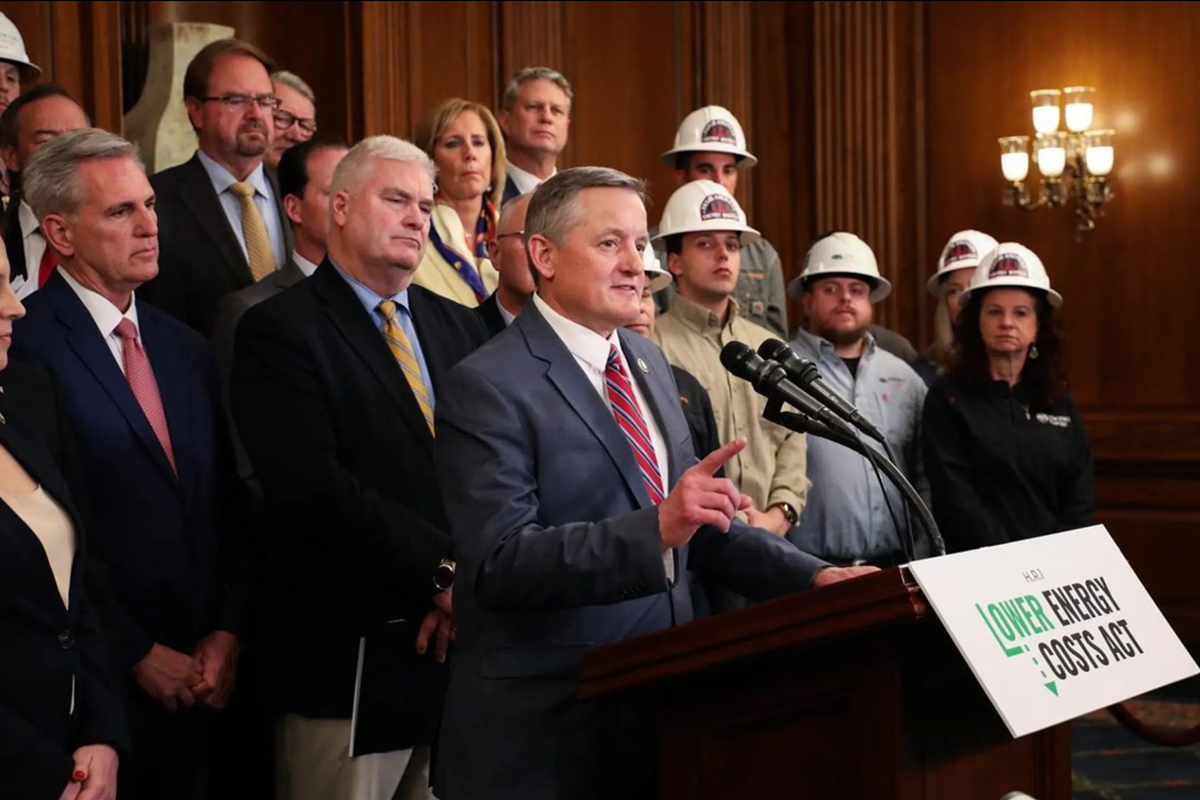
A new bill passed by the U.S. House of Representatives, the Lower Energy Costs Act, attempts to streamline processes that impede, add complexity to, or prevent our ability to develop hydrocarbons and renewable projects alike. LECA also clears a way for private industry to mine for rare earth minerals that are desperately needed for national defense and tech innovation. Finally, it reforms arguably one of the most arcane processes in modern government that has drifted far from the original legislative intent: the National Environmental Policy Act. Delays in transportation projects, litigation against hydrocarbon development, and stymieing construction of commercial nuclear energy facilities all come from the abuse of NEPA and it has exacted a large burden on all Americans.
The Biden administration’s energy agenda has sought to move the United States away from its historical reliance on fossil fuels, which provided 60.2 percent of the nation’s total energy use in 2022. For better or worse, however, oil, natural gas, and nuclear-powered energy still play a major role in securing our nation’s prosperity and security. Although domestic renewable energy production increased modestly after the Russian invasion of Ukraine, there is no currently reliable, scalable, and exploitable substitute for non-renewable sources. Not surprisingly, Americans endured a spike in energy prices these last two years, with price increases taking more than $180 per month out of the average family’s budget, or roughly five percent of the average monthly household income.
With supply chains still recovering from the effects of the COVID-19 pandemic, and American families and businesses continuing to struggle with inflated energy and commodity prices, the House Republican majority has introduced a package of bills to resolve policies that have undermined U.S. national and energy security. Signaling that fixing energy policy will be its top priority, the newly elected House majority made the Lower Energy Costs Act its first order of legislative business by designating it as H.R. 1, the bill number traditionally reserved for the majority party’s most important agenda item. The proposed legislation is a compendium of energy reforms originating in three House committees: Energy and Commerce, Natural Resources, and Transportation and Infrastructure. Republican leaders have reserved this entire week to debate and ultimately approve the package.
Below, we evaluate the merits of the Lower Energy Costs Act, which would reform land leasing, overhaul environmental protections that strictly limit resource extraction, and streamline the regulatory approval process for mineral resource extraction and nuclear energy development.
Oil and gas lease sale reforms
Federal oil and gas production royalty revenues have decreased significantly and have been mismanaged relative to the track record of state trusts. Federal policy has dramatically reduced American oil and gas production and associated revenues, such as regulatory roadblocks imposed by the Biden administration on oil and gas exploration on federal lands. Title II of LECA tightens the timelines for permits regarding lease sales and places strict limits on litigation meant to delay granting of permits, both clear signals that the Congress wants to see action sooner rather than later.
Language from the Committee on Natural Resources would promote oil and gas development on federal lands by establishing a series of minimum leasing thresholds. This would require the Department of the Interior (DOI), which oversees this type of oil and gas production, to be more transparent with respect to the pace of leasing approvals.
First, Section 20101 requires DOI to immediately resume quarterly lease sales on federal onshore lands in addition to holding at least four lease sales per year in each state with eligible lands. Similarly, Section 20107 would compel DOI to conduct all lease sales described in the 2017–2022 Outer Continental Shelf Oil and Gas Leasing Proposed Final Program that have not been conducted as of the date of enactment, no later than September 30, 2023. Moving forward, DOI would be required to hold a minimum of two oil and gas lease sales annually in available federal waters in the Central and Western Gulf of Mexico Planning Area, and in the Alaska Region of the Outer Continental Shelf.
Finally, the legislation would modernize lease sales by requiring DOI to publish information online, and report to Congress, on the processing of onshore and offshore drilling and exploration permits; which parcels are nominated for lease; leases granted; and usage of fees from applications for permits to drill. Together, these actions could increase the number of leases held by energy companies while stimulating the infrastructure development required to grow domestic energy markets. The recently passed Infrastructure Investment & Jobs Act (Bipartisan Infrastructure Bill), which authorized $1 trillion to modernize domestic infrastructure, does not focus on developing the energy sector’s refining and transportation capacity. Rather, this exorbitant new law emphasizes the underdeveloped and still-unreliable renewable energy sector, which cannot supplant our nation’s fossil fuels any time soon. Increased domestic sourcing and production can stabilize energy prices and undo the harm caused by misplaced faith in alternate energy sectors. The ongoing demand for energy will require a comparable increase in energy infrastructure.
Streamlining the National Environmental Policy Act
The nation’s most byzantine and costly regulatory law may very well be the National Environmental Policy Act (NEPA) and the regulations that flow from it. The NEPA approval process peaked at an average of just over five years in 2016–over 50 percent longer than just six years earlier–and has remained unacceptably high since. One study by R Street scholar Philip Rossetti determined that:
Delayed infrastructure deployment can result in economic impacts from delayed productivity, as well as reduced incentives for infrastructure investment. Further, from an environmental perspective, NEPA is increasingly becoming an involuntary impediment to clean energy and conservation-related projects. This is especially problematic given that this analysis finds 42 percent of the Department of Energy’s (DOE) active NEPA projects are related to clean energy, transmission or conservation, while only 15 percent of the DOE’s projects are related to fossil fuel — most of which were for Liquefied Natural Gas (LNG) exports that typically displace foreign coal.
In both the transportation or energy sectors, burdensome regulation, excessive litigation, endless document preparation, and increased costs of construction diminish everyone’s quality of life because fewer projects are completed. By way of background, NEPA is triggered when any federal agency develops a proposal to take a “major federal action” as it is defined in the Federal Register (40 CFR 1508.1). A federal agency then must prepare an Environmental Assessment (EA) or an Environmental Impact Statement (EIS). The EA is a brief document that provides evidence and analysis to determine whether an EIS is necessary. Where the process gets bogged down is the determination of whether the relevant federal agency issues a Finding of No Significant Impact. Despite prior attempts by Congress to expedite the process, there are no current time limits on the agency review process; if approvals of multiple agencies are required, completion times stretch on for as long as each agency deems necessary , even for an EA that ultimately determines a full EIS is not needed. The Council of Economic Quality found that the average length of a final EIS conducted by the Federal Highway Administration is 742 pages, and the average time to conduct these NEPA reviews is nearly seven and a half years. Not surprisingly, a study completed in 2017 estimated that by simply shortening the timeline for EIS statements, an additional $250 billion in private investment would be available for transit and energy projects, freeing capital for investment and job creation for everyday Americans.
The second major component of LECA would significantly reform the NEPA process for all sectors of the economy and provide decisionmakers with greater visibility into construction projects being completed to benefit the public. In the context of natural resource extraction projects it would, first, require that certain low-impact activities and activities in previously studied areas on public lands would not be defined as “major federal actions” under NEPA. This would apply to a variety of energy projects and activities such as geotechnical investigations; transmission infrastructure upgrades; off-road vehicle use in existing rights-of-way; meteorological towers; and geothermal exploratory wells. It would clarify that environmental reviews for lease sales should be limited to impacts directly related to that sale.
LECA imposes a 120-day deadline on filing litigation in connection with final agency actions concerning energy and mining projects, and a similar deadline to file a claim on any final agency action subject to NEPA. Additionally, it sets deadlines for completion of NEPA review at one year for environmental assessments and two years for environmental impact statements, unless a deadline extension is agreed to by the project sponsor.
Finally, LECA appropriates funds for the Council of Environmental Quality to conduct a study on the potential to create an online permitting portal for NEPA. This platform would further streamline these processes by providing a unified portal for applicants to submit the required documents and materials. The system would allow applicants to track the status of their applications and improve communications with the relevant agencies.
Overall, these reforms would insulate energy markets from shocks like those the United States experienced due to the war in Ukraine. Securing supply chains, moreover, is important not only to energy, but to other components that drive our modern economy.
Permits for Mining of Rare Earth Elements
LECA would enhance America’s ability to develop critical energy resources by improving the environmental permitting processes for facilities that refine and process essential minerals. The nation’s vital supply chain for precious and rare earth metals and resources now ranks as one of our greatest defense and manufacturing vulnerabilities.
LECA, as drafted by the House Committee on Natural Resources, expedites the permitting process for the mining of valuable minerals on federal lands involving only minor surface disturbances. The language under Section 20304 would include mining as a covered activity under the FAST Act passed by Congress that would help promote faster project delivery. Similarly, any project receiving funds from the Defense Production Act, presumably for defense-related mining projects involving rare earth minerals, would also be covered by the FAST Act. As it relates to federal lands, agencies that manage land would be barred from withdrawing the asset from mining nominations without first completing a mineral assessment and an accompanying study weighing the impact to U.S. economic and national security interests. In perhaps the most restrictive terms placed on the Secretary of Interior in LECA, Section 20402 prohibits DOI from throttling energy or mining activity on federal lands. While the war in Ukraine has put energy in the forefront of national security concerns, mineral resource insecurity creates potential for espionage in the manufacturing of outsourced national security components.
The recently enacted CHIPS and Science Act will receive a boost from H.R. 1’s provisions to source domestic natural resources and use these materials to manufacture necessary industrial components. Title III (Permitting for Mining Needs) covers these resource areas of interest, and includes a provision for labeling uranium as a critical mineral (Sec. 20308), a prerequisite to expand nuclear energy development.
Opportunity for commercial nuclear power plants and other low-carbon power generators
While LECA does not contain the word ‘nuclear,’ the United States’ nuclear industry stands to benefit from several of the proposed reforms. In particular, streamlining the NEPA process will remove some of the excessive regulatory barriers that have stifled investment in new nuclear power plants since the 1970s.
For example, Vogtle 3 and 4 — two reactors that were built at the Vogtle Electric Generating Plant in eastern Georgia — took years to clear all requisite regulatory hurdles. The following timeline illustrates the regulatory morass utilities encounter when they propose to build a nuclear facility.
The Southern Nuclear Operating Company (SNC) applied for an Early Site Permit (ESP) in August 2006 and nearly two years later submitted its combined Construction and Operating License (COL) application. The submission of the COL application triggered the start of the NEPA process for the Vogtle 3 and 4 reactors. The Final Supplemental Environmental Impact Statement for their COL application was not published until March 2011, three years later. Vogtle 3 and 4’s Final Supplemental EIS is a 568 page document. Under the reforms proposed in this bill, EISs cannot exceed 150 pages — or 300 pages in the case of a proposed agency action of extraordinary complexity. The proposed changes would have reduced SNC’s time in the NEPA process by one to three years. While the benefits these reforms would have had on the Vogtle 3 and 4 project may seem modest, they will encourage more projects to begin the relevant approval processes. There are innumerable projects that were abandoned long before they even began the NEPA process out of fear of the endless litigation that would render the project unprofitable.
The story of the Cape Wind Project has served as a deterrent for companies pursuing grand plans to generate low-carbon electricity. The Cape Wind project aimed to produce 454 MW of wind power in Nantucket Sound. From 2001 to 2017, the project owners spent 100 million dollars seeking approvals and fighting litigation. The project was ultimately canceled. Now the Vineyard Wind project, having learned from Cape Wind’s woes, is pursuing a project to build 804 MW of wind power capacity further offshore. This project is also facing costly litigation, despite previous approvals and earlier reforms to try to streamline approvals for offshore wind. The proposed reforms to NEPA under LECA will further reduce project risk for these ambitious energy projects and drive additional investment in low-carbon power. Without making these reforms to permitting, the subsidy funds in the Inflation Reduction Act will end up being spent on lawfare instead of building out energy infrastructure to reduce electricity costs for American businesses and families.
LECA includes provisions that will help to shore-up the uranium supply chain, securing the primary fuel for all commercial nuclear power plants. Section 20308 amends the Energy Act of 2020 and updates the list of critical minerals to include uranium. Once a mineral is added to this list, Section 10001 directs the Secretary of Energy to: conduct ongoing assessments of the supply chains of these critical minerals and energy resources; develop strategies to strengthen the supply chains in the United States; develop substitutes and alternatives; and improve technology that reuses and recycles these critical energy resources. This designation and associated directives in LECA seek to remedy a major U.S. vulnerability: the need to onshore more of the critical aspects of the supply chain for nuclear power plants. During 2021, only seven percent of the uranium loaded into American nuclear reactors came from the United States. Kazakhstan, Canada, and Australia provided 64 percent of all of the United States’ uranium purchases.
One of the most contentious portions of LECA is bound to be Section 10004, promoting cross-border energy infrastructure. This section streamlines the approval process for the construction, connection, operation, and maintenance of facilities for the transportation of oil or natural gas or the transmission of electricity across international borders of the United States. This section repeals the requirement to secure a presidential permit in order to create one of these facilities. In the future, an entity seeking to build a pipeline between the United States and Canada would need to obtain a certificate of crossing from the Federal Energy Regulatory Commission (FERC).
The structure of FERC, its focus on technical analysis, and the transparency provided into its decisionmaking processes makes it the ideal agency to make these types of decisions. FERC is an independent agency that operates within the Department of Energy. FERC is led by a commission of five members, appointed by the president and confirmed by the Senate, and no more than three of the commissioners can be from the same party. Under the proposed regulatory changes, approvals for projects like the Keystone XL pipeline would no longer be dependent on the whims and political calculations of the president but determined by FERC’s less political and more technical analysis and processes. This change will spur renewed interest in cross-border energy infrastructure that will benefit the United States, Mexico, and Canada. FERC would have 120 days to issue a certificate of crossing after the NEPA process is complete, unless they have a clear reason why the border-crossing facility is not in the public interest of the United States. However, this section has implications well beyond natural gas pipelines.
Section 10004 has the potential to spur new cross-border projects that could decrease greenhouse gas emissions, create jobs for Americans, and increase grid reliability. The streamlined approval process for new cross-border transmission projects could become the catalyst for the delivery of nuclear, wind and solar, and hydroelectric power from Canada or Mexico. Likewise, as the United States scales up investment in these technologies and resolves its energy challenges, these changes could ease the process by which the United States exports low-carbon power to its neighbors, thereby helping those countries lower their costs and emissions. Reducing the existing regulatory barriers can ultimately pave the way for an abundance of low carbon, reliable energy in North America. As R Street’s Rossetti observes:
Delays in completion of clean energy projects due to NEPA requirements can result in increased emissions and environmental harms. By contrast, policies that improve NEPA timelines can have environmental as well as economic benefits.”
Likewise, Section 10007, Unlocking Domestic LNG, will help states like Texas provide the liquified natural gas that America’s allies and citizens need to reduce their carbon emissions and keep the lights on. This section will encourage new investment by streamlining the approval process for LNG import and export terminals. FERC would be the sole federal entity with authority to approve relevant applications and determine whether the export or import of natural gas is in the public interest. This change will be particularly valuable for Texas and Louisiana, both of which have companies seeking approvals to build new export terminals to meet the rising demand for LNG.
Energy permitting reform is bipartisan
While H.R. 1 can be expected to pass the House, albeit narrowly and on a mostly partisan basis, the real negotiations will occur between lawmakers from both bodies, and most importantly between House Republican leaders and the Chairman of the Senate Committee on Energy and Natural Resources, Joe Manchin (D-WV). Manchin, in fact, recently indicated a willingness to work with House Republicans on compromise language in many of these areas, telling attendees at an influential energy conference in Houston that he was open to many of the reforms in the Lower Energy Costs Act, but not all of them, and that H.R. 1 should be divided into smaller parts and not be “a major energy bill that reforms everything again[.]”
Indeed, perhaps the most consequential provisions in LECA relate to permitting, both within and outside of NEPA. The universal desire for rational permitting reform–permitting rules, after all, apply both to fossil fuel and renewable projects–suggests that this portion of H.R. 1 holds the greatest promise for a bipartisan convergence. “Energy permitting — not just as it relates to drilling but as it relates to the grid and electrical distribution,” one Democratic lawmaker told the Politico Playbook, “is absolutely fertile common ground.”
At its best, government-owned land can help us achieve important goals, such as protecting wildlife refuges and funding public priorities. Approximately 39 percent of the total land in the United States is owned by government entities, including 28 percent by the federal government. In many western states, the share of government ownership is much higher, and is a major source of controversy. For example, only 14 percent of the land in Nevada is in private hands; the federal government owns 84 percent, severely constraining Nevadans’ self-determination.
One solution may be to devolve control of public lands to the states. Texas’ success in managing public lands could serve as a national model.
Through prudent management of lands with minimal oversight, Texas has consistently generates larger revenues from smaller acreage, when compared to other states’ and federal lands, all while utilizing fewer personnel. The federal government continues to underperform in terms of revenue, due to overregulation and relying on a much larger workforce.
In the earliest days of our republic, the 1785 Northwest Ordinance provided land to new states to generate revenue in lieu of federal funding. The abundance of federal land granted to the states would give states a source of revenue with which to fund education at all levels, a necessary service to develop the nation. These lands have continued to provide funding for education today and the success of states’ land management extends well beyond education. Land revenues support other public services including institutions of higher education, penitentiaries, and health care facilities. These types of spending serve the public good and are commensurate with the expected use of these lands.
These lands given to the states are state trust lands, which typically are managed by a state’s land board or a group of trustees nominated by the state. The land itself, along with the natural resources and products produced from them, are valuable state assets. States rich in natural resources, particularly in energy, derive a greater amount of revenue from these lands, assuming their land boards manage land leasing and production assets prudently.
Texas state lands fund schools and universities
Texas is able to generate comparatively large revenue to support public institutions. Notably, Texas did not receive its state land grants in the same manner as most other states. However, for the purposes of this discussion, the functioning and management of these lands remain the same. The Texas General Land Office (GLO) manages over 13 million acres and generated over $1.8 billion during the 2021 fiscal year, with the majority of earnings coming from oil and gas production.
School trust funds are the major beneficiaries of these revenues. The royalty revenues collected from mineral or surface right production are regularly invested in long-term vehicles, usually referred to as “permanent funds.” This investment allows Texas to continue its support for public education through careful fund management, similar to that of an endowment, in which the generated interest goes to K-12 or postsecondary education while the principal remains stable. For instance, the endowment for postsecondary education institutions—which is supported by the Permanent University Fund—had grown to $30.9 billion in 2018 to benefit the University of Texas and Texas A&M University systems. The legislature also weighs in on how much to distribute to the Available School Fund–which is funded by permanent school funds, taxes, and contributions by the GLO–to supplement current education spending.
Texas has been careful with this endowment, allowing it to grow into a crucial permanent school fund, valued at $45 billion (FY 2020). For context, this constitutes 50 percent of the total value of permanent trust funds across all states with trust lands. What makes the Texas model especially appealing is that its permanent school fund, which supports debt financing for public and charter schools, lowers interest rates. This reduces operating costs and sets the standard for how other states with trust lands can manage and grow their permanent funds.
The dominant position of the U.S. Department of the Interior
The total acreage managed by state land trusts is approximately 156 million surface acres and 177 million mineral acres. Meanwhile, the federal government’s various bureaus and services under the U.S. Department of the Interior managed about 640 million acres–nearly 14 times the amount of land under state management and roughly one quarter the landmass of the United States–through various offices and bureaus like the Forest Service, Bureau of Land Management (BLM), Park Service, and Fish & Wildlife Service. The BLM owns and manages 10 percent of U.S. surface land and one-third of subsurface mineral resources, making it the greatest resource and landholder of all federal bureaus and services.
In 2021, the BLM generated $451 million from various uses of the 245 million acres of their managed lands. In comparison, Texas managed only 13 million acres–roughly five percent of the landmass the BLM manages–but generated over $1.8 billion in revenue, nearly four times the revenue the BLM realized. States that follow the Texas model, it is clear, can outperform the federal land management model.
The federal government constrains land development
The full extent of the Texas advantage extends to the efficiency of its much smaller workforce. The BLM collected its revenue with 10,000 employees and over 27,000 volunteers. The Texas GLO, by contrast, employs only 56 full-time employees that perform a wider array of tasks. For example, GLO employees manage the energy sector, conduct mineral reviews, audit finances, serve as landmen and geologists, and generate more revenue. As a result of this prudent stewardship, Texas can increase its level of support for funding public services. In 2023, royalties generated from oil and gas, which are treated separately from revenue, amounted to $2.75 million. This sum provided the budgets for those full-time employees and for energy marketing ($649,000). Oil and gas producers operating on leased lands pay these royalties to the GLO, amounting to 20–25 percent of goods produced. The Texas model demonstrates how states can continue to fund budgets through efficient trust land management. The shifting priorities of the U.S. Department of the Interior, on the other hand, strain the federal government’s ability to most effectively utilize lands as partisan politics has dissuaded energy development.
Interior leadership has tremendous unilateral authority to reduce or even eliminate resource development on federal lands. For example, in April 2022, Interior Secretary Deb Haaland announced that the BLM assessed lands potentially available and eligible for leasing in Alabama, Colorado, Montana, Nevada, New Mexico, North Dakota, Oklahoma, Utah and Wyoming. It analyzed 646 parcels on roughly 733,000 acres that had been previously nominated for leasing by energy companies. After an exhaustive study recommending ratcheting down development in favor of environmental protection, the final sale notice slashed the originally nominated acreage by 80 percent. This reduced the amount of potential revenue these states could generate due to the minimized energy extraction achievable. Although these states are not as energy rich as Texas, there is still considerable revenue to be made from their respective energy sectors.
What accounts for Texas’ success, outside of its relentless dedication to fiduciary responsibility, is the variety of ways it uses its lands. Although Texas primarily generates revenue from hydrocarbons, it generates the rest of its revenue from agriculture, other resource extraction, land-leasing, and the sale of renewable resources, including hydro, solar, and wind. States and trust lands without hydrocarbon revenue can explore these varieties of land uses to provide the necessary revenue to support education and other public institutions.
Western states like Colorado, Utah, Wyoming, Montana, Washington, and Oregon have diversified their sources of economic output to generate revenue from their trust lands. While these states do not possess the prolific oil and gas reserves or solar capabilities like Texas, New Mexico, or Arizona, they were able to generate over $1.6 billion in cumulative revenue from all sources in 2018. Through careful management of trust lands, states can continue to protect these lands through conservation while providing a source of income to support the residents of those states. Greater responsibility of trust lands provides states with greater autonomy over where and how they manage public resources that the federal government has proven unable to do.
We all know that everything is bigger in Texas—including the upcoming biannual revenue estimate. Thanks to escalating property values, robust oil and gas pricing and increased sales tax generation led by Texas consumers, revenue will potentially reach more than $280 billion.
Yet, as is all too often the case, the runup to this legislative session has been filled with a cacophony of silence when anyone around the Capitol suggests downsizing government, reducing the size and scope of regulation, or reducing property tax liability on homeowners. We are, sadly, used to seeing this in Washington D.C., where under two years of the Biden Administration over $5.7 trillion in spending has been approved leading toward record national debt and historic inflation. Further, pork barrel earmark spending was restored by Congress earlier this year.
While bloated government and wasteful spending is nothing new out of Washington, this isn’t what’s supposed to happen here in Texas—in recent history, we’ve been a model for restraining spending, voting in the halls of power consistently for smaller government and less obtrusive regulation on businesses and everyday life. But this legislative session is different with an estimated $27 billion in cash surplus, a Rainy Day Fund near its statutory limit at $13.67 billion, with education focused endowments like the Permanent School Fund and the Permanent University Fund flush with cash at over $80 billion in assets under management. The size of the Texas budget surplus is larger than the annual general fund expenditures of 40 other states. Why are legislators being so coy about this historic opportunity to return money to the Texas taxpayers?
Results speak for themselves when conservative ideas win in the Texas State Capitol. Texas is the state with the most Fortune 500 companies, according to the Fortune 500 annual list of the largest U.S. corporations, with 53 Fortune 500 corporate headquarters that call our state home. Many of these companies have moved from higher tax, higher regulated states including the announcement this past Summer that Caterpillar will be relocating here from Illinois. From startups to large corporations, job creators choose Texas because of our business-friendly climate and an understanding that our elected leaders won’t abuse or mishandle the precious resources taxpayers provide. With jobs comes more population growth, which is one of the greatest indications of success—particularly when many who come here are from states with bloated government with debt obligations that have no hope of ever being repaid. But to continue this remarkable streak, Texas leaders need to be vigilant with our resources and concerned voters need to hold them accountable.
A bold conservative outcome for this Session would be to provide a long-awaited property tax relief package that sends a loud and clear message to Texas property owners that they no longer have to fear being taxed out of their home. Additionally, the Lege should work on an across the board cut of operational budgets for State agencies much like private business underwent during the economic uncertainties of COVID. Consequently, business and investment would continue to be attracted to the dynamic Texas economy with the knowledge that state government can responsibly manage excess revenues and encourage accountability of its executive agencies to operate efficiently.
Don’t let legislators hide behind constitutional amendments that they claim restrict this action—demand that they do their job. Creativity and determination should triumph when it comes to taxpayer dollars. Everything might be bigger in Texas, but government spending doesn’t always have to be. If you agree with me that this Session should prioritize the Texas taxpayer, please call your legislator to make your voice heard.
As I complete two terms as the 28th Land Commissioner for the Great State of Texas, my heart is filled with immense pride as I reflect upon our accomplishments. I am thankful to our great team of professionals at the General Land Office for their efforts in doing “more with less,” their flexibility during the most devastating storm in Texas history and the COVID pandemic, and their altruistic sense for serving higher causes.
I campaigned on the idea that private sector principles are needed in government. Upon taking office, we immediately went to work with a spirit for service and achieving government efficiency in the State’s oldest agency.
Advocating for “leaner and cleaner” government is something I will continue to do, particularly in the executive agencies that spend more and more taxpayer money but accomplish less than ever for the people they committed to serve.
Now, I’d like to give you a look back on what we achieved over the last eight years.
Government Accountability
I took the position that reforms are needed across all executive agencies as it relates to contracting, conflicts of interest, and transparency—by starting with my own agency.
I reformed GLO’s contracting processes, eliminating no-bid contracts in nearly all circumstances. I created the Director of Open Government Position to overhaul the GLO’s standards for open records requests and uphold the highest standards of transparency within our government.
Established a Compliance Division to monitor the GLO contracting process to prevent conflicts of interest and to ensure transactions are accomplished openly and fairly across the Agency.
Reduced government spending, leading by example. I required all my directors to justify each expenditure every year, rather than the conventional method of adopting last year’s budget and increasing it based on CPI or other measures utilized in D.C.
Veterans
As the only non-judicial statewide office holder in Texas to have served in the military, I felt compelled to advocate for veterans during my time as Chair of the Veterans Land Board. In 2016, I initiated the “Year of the Veteran” at the GLO by attending and hosting over 100 veterans’ events. Through this journey traveling throughout the state with veterans of all backgrounds, we developed many ideas to better serve these Texas patriots.
I initiated the Unaccompanied Veteran Burial Program upon learning that many patriots passed without next of kin claiming or initiating the process of burial at Texas State Veterans Cemeteries. We have successfully increased awareness, having multiple burials with over 400 individuals in attendance. As of November, we have buried 180 Veterans without known next-of-kin as part of this program. Other states are now looking at creating their own programs to replicate our success.
I commissioned the 9th Texas State Veterans Home in Houston. The project was completed in 2020 and immediately began housing Texas Veterans, bringing the total of Texas Veterans living their golden years in the care of the VLB to over 1,000. Additionally, the Veterans Land Board unanimously decided to create a 10th home in Fort Worth.
In first term, I worked to create a new website for veterans that streamlined access to services and benefits. Four years later, we expanded services once again, increasing access to information regarding all VLB programs.
To better connect service veterans to the community, I created several initiatives, including “Mail Drop,” a letter-writing campaign that encourages citizens to write the Veterans residing in our VLB Nursing Homes and thank them for their service and sacrifice. Nearly 1,700 Texans now engage with our Veterans monthly.
As I examined the incredible stories from our Voices of Veterans program, I realized we were not capturing the stories of our post 9/11 veterans. I authorized the creation of Next Gen Warrior, a series to capture the success stories of post-9/11 Veterans as they leave the battlefield and transition into civilian life. Throughout this series, nearly 100 post 9/11 Veterans’ stories were added to our collection, while 247 Veterans’ stories have been archived.
Many veterans in nursing homes celebrate their centennial while in our care. This led us to create the 100 for 100 program, helping Texas State Veterans Nursing Home residents celebrate their 100th birthday. For each birthday celebration, our team requested 100 cards from the community. Each call for cards resulted in thousands of Texans responding and showering our veterans with well wishes and respect. Since the creation of the program, 8 Texas Veterans have celebrated their 100th birthday with us.
Perhaps a hallmark of my time at the GLO was being known as the “technology Commissioner,” leading the implementation of new programs and technology across the Agency. It also marked the first time that artificial intelligence was integrated into the VLB’s daily operations to expand customer service for Texas Veterans through a virtual assistant, aptly named “Maverick.” Maverick utilizes cutting-edge A.I. solutions and is designed to save Veterans time and frustration while navigating their benefits. To date, 4,410 Veterans have received assistance from Maverick.
Education
As the only former educator to serve statewide and considering the GLO provides a large source of revenue to K-12 public education, I engaged in “A Conversation with our Future,” visiting 50 schools across Texas. These weren’t typical “politician” school tours. Instead, I taught a Texas history lesson in each classroom with GLO archives, restored maps, and even a cannonball fired at the Battle of the Alamo. Through this year-long exploration of Texas education, we interacted with students, parents, and front-line teachers, leading to meaningful discussions with state and local elected officials on how to improve education in Texas.
From this experience, I was able to better leverage the GLO platform to help champion school choice reform in Texas. We should place a priority on all types of educational systems, including homeschool, public, private, charter, intercity, rural, and dual language. We need to continue advocating about the need for greater accountability and more results in public education.
Post-COVID, we developed and rebranded the previously created GLO education website to streamline information access and lesson plans provided by the GLO for use by Texas educators and parents. New content is continually created, providing more resources than ever before to teachers across Texas. To date, we’ve created 16 new lesson plans for Texas teachers.
Four of these lesson plans utilized Voices of Veterans oral history interviews to bring Texas Veterans’ tales of valor and bravery to life inside our classrooms. Lesson plans take interviews from each conflict dating back to WWII and help students learn from primary source interviews.
In perhaps the most obvious “common sense” moment of my time as Commissioner, I advocated for Texas children’s rights to engage in free enterprise and operate lemonade stands without the overreach of government regulation.
Energy & Property Rights
Bringing real-world energy sector and asset management experience to the GLO, I sought to modernize the manner in which the State leased oil and gas minerals to maximize revenues for K-12 education. In partnering with EnergyNet.com, we pioneered the effort to enable online bidding for energy lease sales. Today, the PSF is performing better than ever, generating the highest returns in history. In fact, in 2022, we recorded the highest revenues in GLO history, generating over $17 billion in revenue.
Being a good steward of natural resources requires robust legal defense, and we were successful in defending Texas lands. We won a major victory for Texas schoolchildren, standing up to the federal Bureau of Land Management’s illegal land grab, protecting state assets for years to come. We fought abuse of the Endangered Species Act by successfully contesting how U.S. Fish and Wildlife defined the status of the Golden Cheeked Warbler in Central Texas.
Given the emphasis on reform and process updates, we generated record-breaking returns for oil and gas and distributed the largest allocations in history to the school children of Texas. In 2019, for the first time in history, oil and gas revenues generated over $1 billion in revenue for the PSF, enabling us to send even more PSF money to students and classrooms across the state. In 2022, we broke that record, generating over $1.7 billion in revenue.
As the energy industry came under attack by the Biden Administration’s overregulation, I launched the “Year of Energy” initiative, working with industry stakeholders to create a comprehensive, “all of the above” energy approach for Texas. Traveling across the state to examine workforce readiness programs at the high school level, I brought the oil and gas economy to life inside classrooms, joining TXOGA and Commissioner Todd Staples to engage with students in understanding how important the energy industry is to our great state.
There is no doubt that Texas’ economy is based on oil and gas. However, Texas has embraced our God-given natural resources while encouraging conservation and driving clean energy innovation. This unique and comprehensive approach has put Texas at the forefront as an international energy producer. Texas leads the nation in energy sector innovation without government intervention. Under my leadership, the GLO forged into new renewable energy leases, generating $230,056.97 from wind energy and $829,635.30 in solar leases.
As COVID-19 swept across the nation, I led the School Land Board in taking action to mitigate the 2020 oil and gas crisis during COVID-19, waiving penalties and interest on late royalty payments. Further, I called on the President and Congress to act by filling our strategic petroleum reserves and consider other free market options to safely and fairly get the critical oil and gas economy back up and running.
Established the Texas Defense Task Force to identify federal overreach and fend off threats to the Texas oil and gas economy, following Governor Abbott’s executive order for state agencies to prepare to protect Texas’ energy industry in the years ahead. The Task Force has worked to ensure that Texas energy is preserved for generations to come by legally defending the state’s invaluable energy resources both here at home and in the courthouse. Texas oil and gas is the backbone of our great state. Not only does the energy industry power our homes and businesses, but it also serves as a critical job creator and makes our state such a desirable place to live. The jobs and livelihoods of hundreds of thousands of Texas families must and will be guarded through every legal action taken. President Biden’s actions against the oil and gas industry will produce a chilling effect against energy workers.
Alamo/History
As a student of history and former Board member of the Texas State History Museum, I knew that the Alamo had been forgotten by leadership and that it was time to restore the Church and Long Barracks while planning a future museum to better articulate the heroism and selflessness demonstrated during the siege of 1836.
Over two legislative sessions, we secured over $130 million to address long-overdue preservation work for the Alamo, ensuring the remaining structures are around for another 300 years to come. In addition, we established a historic partnership with the city of San Antonio and key stakeholders to reunite and restore the Alamo Battlefield, closing the street in front of the church that created car traffic across the sacred ground where the defenders gave their lives for liberty—this is the first time since 1836 that the battlefield is under State control.
Among several cannons, our team restored and returned the Alamo’s iconic 18-pounder cannon to the Alamo battlefield. In the Fall of 2022, I was proud to unveil the completion of the Alamo Collection and Exhibit Building on the east side of the State footprint to display the iconic Phill Collins Alamo Collection.
Led GLO in passing new legislation that allows the Save Texas History program to accept private donations, allowing the GLO map program to begin acquisition of new historic Texas maps, such as Zebulon Pike’s atlas of six printed maps, detailing the exploration of Spanish Texas. The maps provided new material for researchers of early Texas history to understand how our state came to be. In total, we obtained 420 new maps and documents for the agency’s collection. To increase access to the incredible collection of maps and documents in the Land Office Archives, I set out to digitize the collection so that Texans across the state and nation could easily access their history. In total, our team scanned 3,388,299 maps and documents into a digital archive that is freely accessible to the people of Texas.
Disaster Recovery
Historically, the GLO helps Texans recover from natural disasters across our great state, and as a hurricane victim myself, it is a role I take very seriously. By far, the most devastating storm in our state’s history was Hurricane Harvey, which made landfall three times, caused over $120 billion in property damage, and killed 39 Texans. On my watch, we immediately responded through partnerships with FEMA and HUD to assemble the largest housing mission in American history. We have helped build or rebuild over 5,792 homes, with 467 under construction, and 1,356 awaiting construction, ultimately assisting over 84,000 Texans. By all accounts, the GLO has repeatedly outperformed other disaster response organizations across the Country.
The Harvey Recovery Mission assigned to the GLO was the first time in our nation’s history that the federal government and state government have partnered together to help Texans recover from disaster. I’ve consistently advocated for expediting federal funds through letters to federal officials and engaging with Congressional leaders on both sides, and focused on efficiently and effectively administering disaster recovery and mitigation programs so that these funds do not languish in Washington, DC – but it isn’t easy. While we all learned a multitude of lessons during this process, I personally watched as Texans were subjected to the federal government’s endless array of red tape and changes in administration.
As such, I made it a personal mission to reform federal disaster relief laws and firmly believe that Congress needs to learn these lessons from Texas now before catastrophic events hit Americans in other parts of the country.
Coastal
While many associate Texas with the “wild west” and endless pastures, Texas truly is a coastal state. With Texas’ critical position as the nation’s number one energy producer, and a key partner in the import and export of food products, the Texas coast is a crucial location for our national economy. There is no doubt that improved coastal protection measures are needed to ensure our state and nation’s stability for years to come. With 367 miles of Gulf beaches and more than 3,300 miles of bays and estuaries, Texas has one of the longest coastlines in the country.
As Land Commissioner, I’ve led the GLO as we accomplished milestones, from managing the public coastline, preparing for hurricane and disaster preparedness, running adopt-a-beach programs, conducting Oil Spill Prevention and Response efforts, to re-nourishing beaches, and serving as a local partner in conjunction with the U.S. Army Corps of Engineers for the creation of a coastal barrier system.
Completed the Coastal Texas Protection and Restoration Feasibility Study, also known as the Coastal Texas Study, which proposes a comprehensive plan to reduce damage from storm surges and restore the ecosystem. Ultimately, the study was approved by the United States Congress.
Led the Agency in completing 14 beach renourishment projects, totaling 7,226,124 cubic feet of new fill.
Implemented 369 beach clean-ups with 93,233 volunteers in cleaning up 1,966,518 pounds of trash from Texas shorelines.
The Agency responded to 5,132 oil spills and worked with the community to turn in 1,737 vessels, giving Texans a means to voluntarily and legally dispose of their vessels before they become a danger to the public or environment.
Final Thoughts
As you see, we implemented a full agenda over the course of eight years and four legislative sessions, knowing that time was short and that the people of Texas expected nothing less. I firmly believe that nearly every government agency should operate with the same sense of urgency and join the cause to make government more responsive to the people we serve.
I want you to know that this fight doesn’t end here, in fact, it is only beginning. I hope you will continue following me on social media and stay engaged with my quarterly newsletter where I will keep you posted on the latest in government and events of the day. I want you to be part of my team that continues to call for “leaner and cleaner” government and stands behind highly qualified Republican candidates that can help get it done.
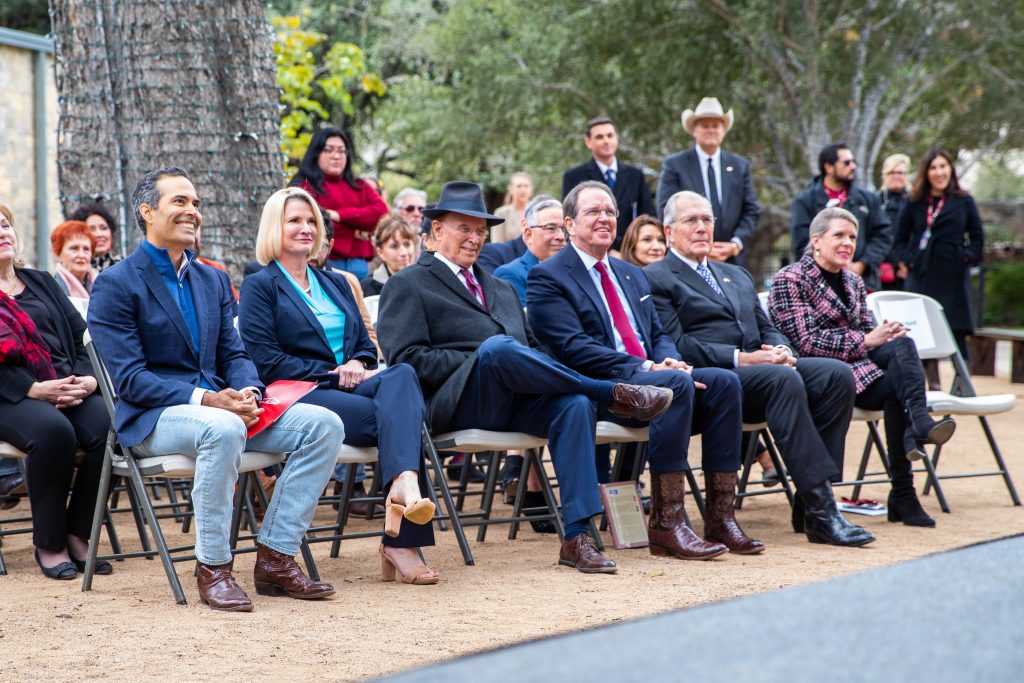
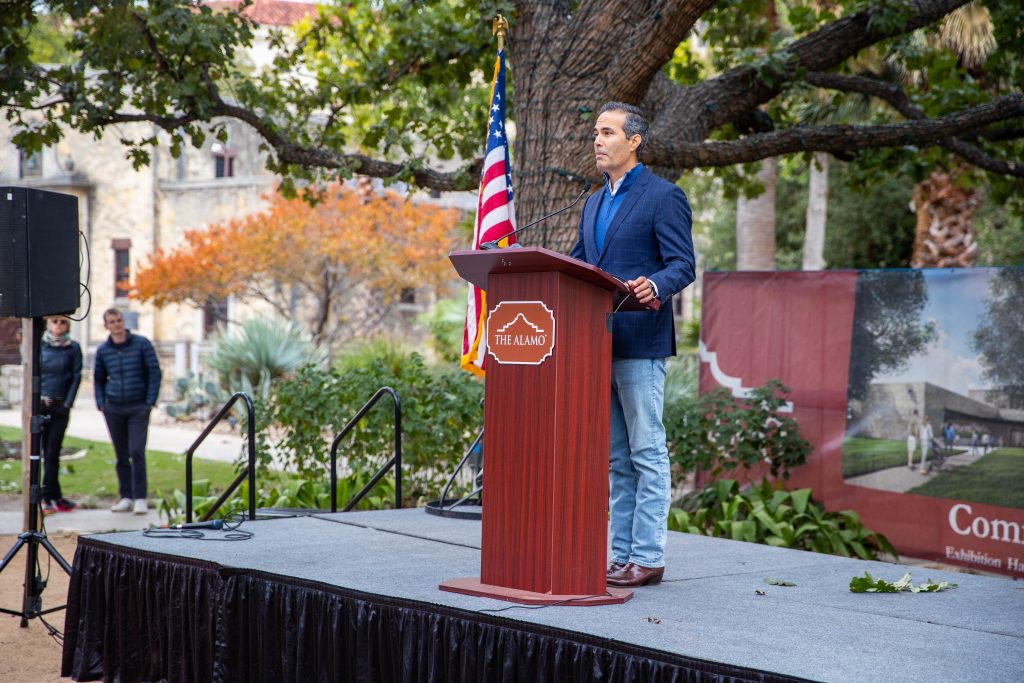
Just before Thanksgiving, I had the honor of attending and speaking at the Sneak Preview event for the Alamo Collections Center. This facility is the first building developed as part of the Alamo Plan, which will at long last, allow for our state’s most famous landmark to be appropriately honored and protected for future generations of Texans. I can’t wait for this facility to officially open to the public on March 3, 2023.
This Sneak Preview event allowed us to celebrate a tremendous step forward in our sacred duty to preserve our State’s most cherished symbol of freedom and independence. The Alamo and the legacy of its courageous defenders, who laid down their lives in the name of liberty, continue to be the backbone of the strong principles that have guided Texans for generations. The new Exhibition Hall & Collections Building will help Texans immerse themselves in the rich history of the Alamo while surrounded by its most precious artifacts, and I look forward to the endless educational opportunities this new addition will bring to all who visit.
The Alamo Collections Center will provide 10,000 square feet of exhibition space, more than five times the current amount. This new building will also house storage and conservation space for the Alamo Collection in order to ensure proper long-term care of objects and artifacts.
In addition to the Collections Center, I’m also very excited for the new Visitor Center and Museum, which is expected to open in 2026. I hope you’re looking forward to these exciting changes that will preserve the Alamo and help share its stories for generations to come.
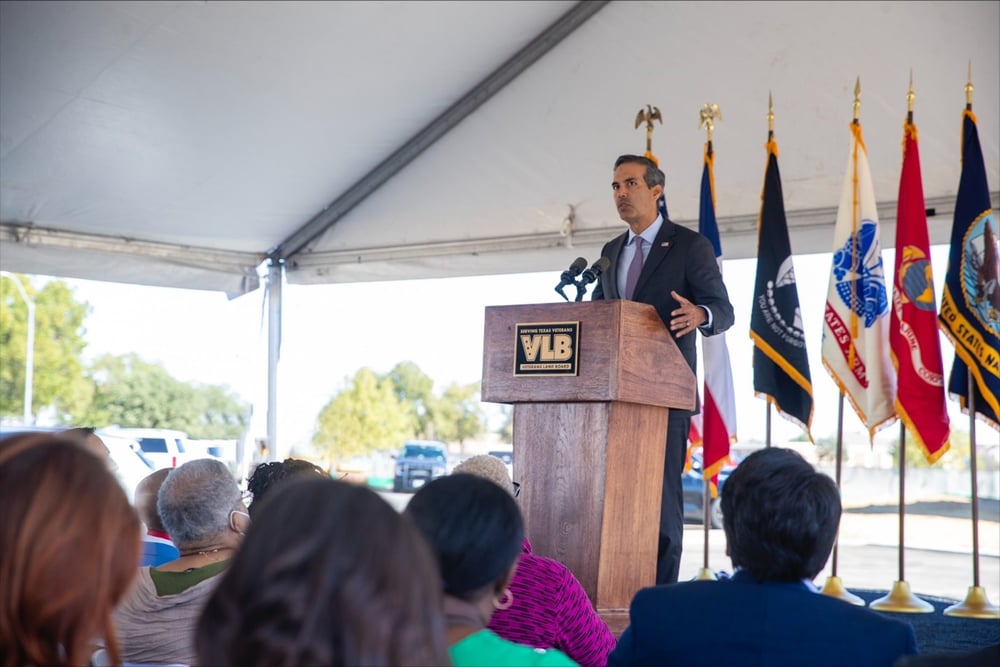
As October came to a close, I had the opportunity to celebrate the soft opening of the 10th Texas State Veterans Home with Keynote Speaker D’Juan Wilcher – Deputy Director of the Veterans and Military Families George W. Bush Institute, elected officials, members of the Fort Worth community, and individuals from across the state who are committed to serving Texas Veterans.
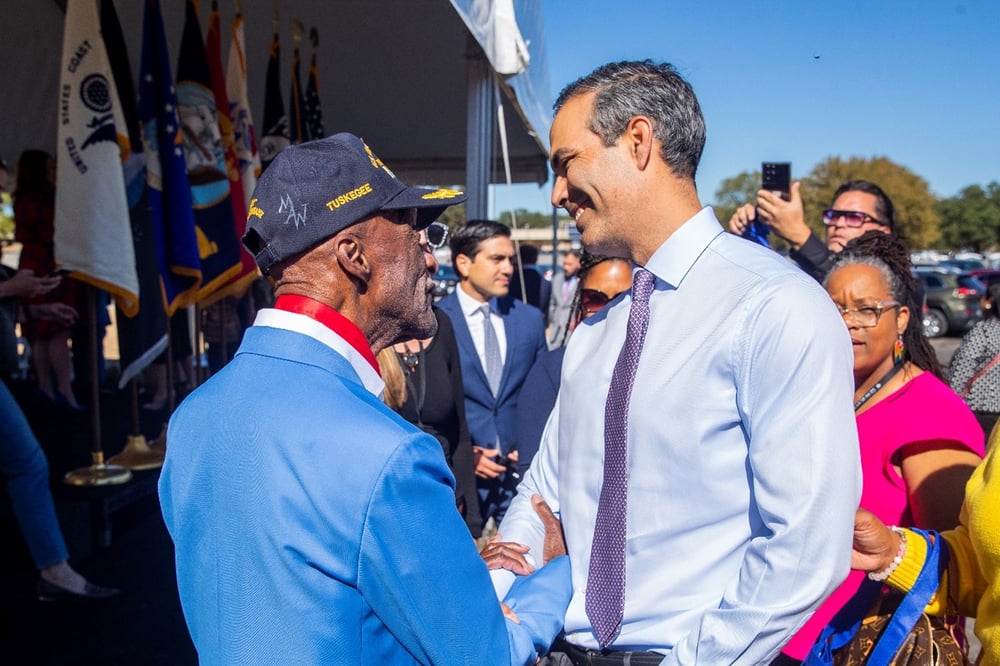
The Texas Veterans Land Board (VLB) was honored to be joined by a surviving member of the Tuskegee Airmen, General Enoch “Woody” Woodhouse, who was presented with an award recognizing his selfless service in defense of our freedom.
The VLB, on behalf of the people of Texas, has celebrated Veterans Day every day by taking care of the 1.8 million military Veterans that reside in the most patriotic state and the greatest country that the world has ever seen. This new home will be more than just a facility, more than brick and mortar. It will truly be a home for our bravest heroes, and I want to thank the future staffers and skilled nursing professionals that will care for the military Veterans who will reside here.
Sincerely,
George P. Bush
It was an honor to chat with General Enoch “Woody” Woodhouse
It was my pleasure to help open this important facility that many of our brave veterans will call “home”
AUSTIN, Texas — The 2021 9/11 Heroes Run took place Sunday at Austin’s Camp Mabry, and among this year’s runners was a familiar face.
Texas Land Commissioner – and Texas attorney general candidate – George P. Bush and his wife participated in this year’s event along with their two boys.
The run aims to unite communities around the world in hopes that we will never forget the heroes who served after the attacks on Sept. 11, 2001, as well as the wars since, such as veterans, first responders, civilians and military.